
Why Product Filters Are Important for eCommerce Stores
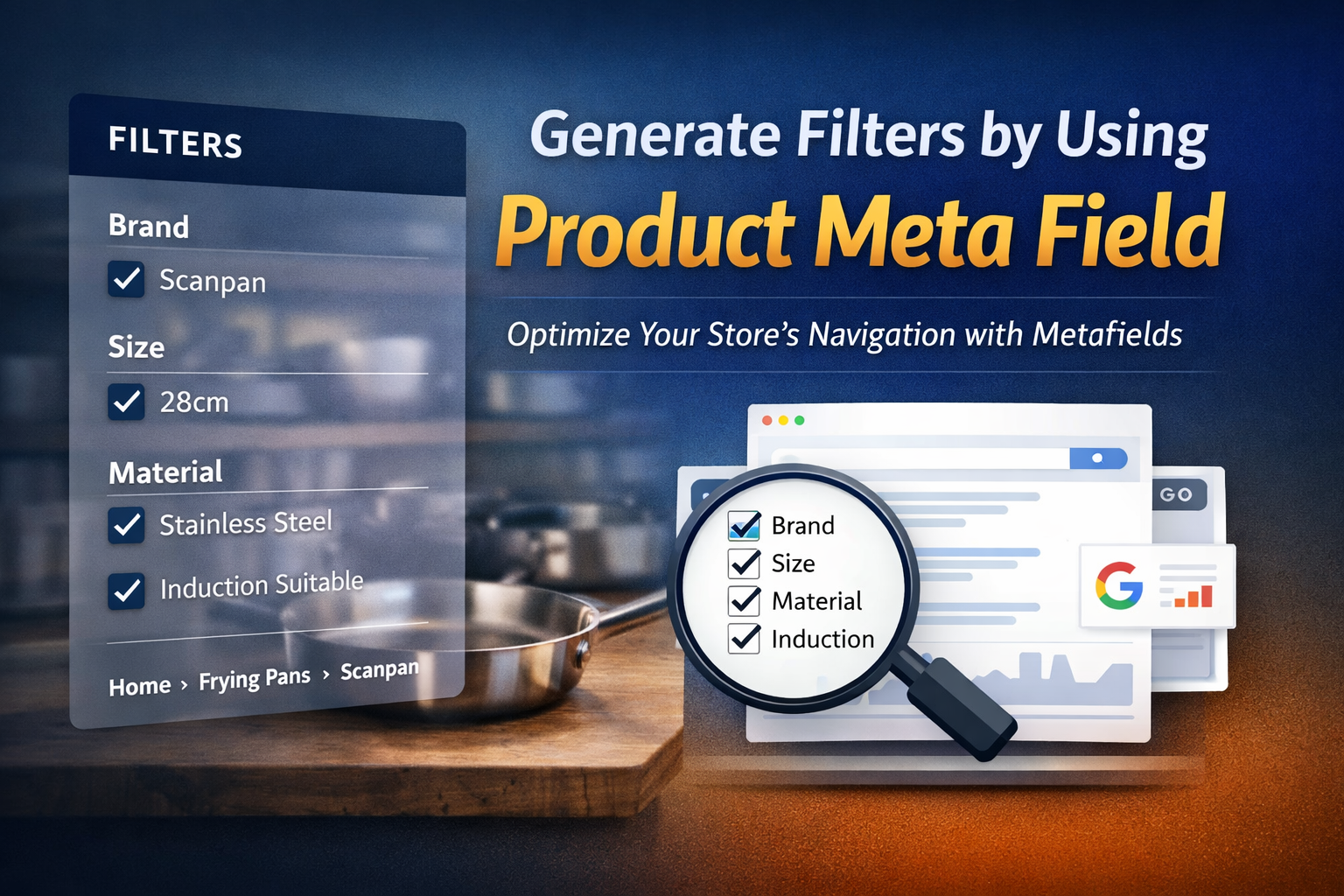
Product filters play a crucial role in improving navigation on collection pages. When an online store contains a large number of products, customers may struggle to locate the exact item they are looking for. Filters solve this problem by allowing users to narrow down product results based on specific attributes such as brand, size, material, colour, compatibility, or other product characteristics. Instead of browsing through a long list of products, customers can quickly refine results and view only the items that match their requirements.
A well-structured filtering system not only improves the shopping experience but also increases the chances of conversion. When users can easily find the product they want, they are more likely to continue exploring the store and make a purchase. Filters therefore act as an important usability feature that helps customers move through product collections more efficiently.
Using Product Metafields to Generate Filters
One of the most effective ways to create accurate and scalable product filters is by using product metafields. Metafields allow store owners to store structured product attributes that go beyond the basic product information such as title, description, and price. These attributes can then be used to generate filters on collection pages.
When metafields are used for filters, each filter option is directly connected to the product data. This means that the filtering system automatically organises products based on their attributes. Store owners simply need to enter the correct metafield values when adding or editing products, and the filters will work accordingly.
This approach ensures consistency because every product follows the same attribute structure. It also makes the store easier to manage since filters update automatically when new products are added with the correct metafield data.
Example of Product Metafield Attributes
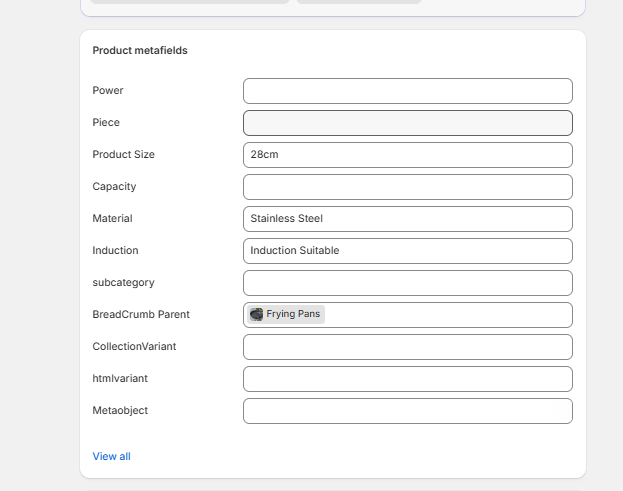
Consider a product titled Scanpan Stainless Steel Frying Pan 28cm Induction Suitable. Instead of relying only on the product title to describe the product, the important product attributes should be stored in dedicated metafields. These attributes help define the product characteristics clearly and allow the filtering system to group products correctly within collections.
- Brand: Scanpan
- Product Size: 28cm
- Material: Stainless Steel
- Induction: Induction Suitable
- Breadcrumb Parent: Frying Pans
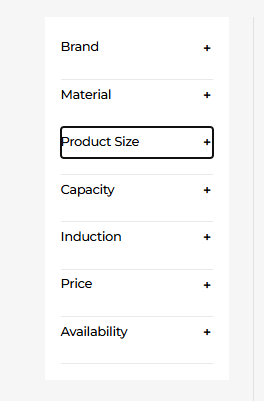
Once these metafields are assigned to the product, the collection page can generate filters using these attributes. Customers browsing the collection can then refine product results based on brand, size, material, or induction compatibility.
Meta Field Under Each Product
How Metafield Filters Improve Collection Navigation
When metafield filters are implemented correctly, they significantly improve how customers navigate product collections. Instead of scrolling through many products, users can quickly select the attributes they are interested in and view only the relevant items.
For example, a customer searching for a stainless steel frying pan can apply the material filter and instantly see only stainless steel products. Similarly, customers looking for induction-compatible cookware can select the induction filter to display suitable products. This filtering process saves time and allows customers to explore products more efficiently.
Because the filter values come directly from the product metafields, the filtering system remains accurate and organised. Each product automatically appears under the correct filter group based on its metafield attributes.
How Filters Help Google Understand Your Site Structure
Structured product attributes also help search engines better understand the organisation of an eCommerce store. When products are categorised using consistent metafield attributes such as brand, material, and size, it creates clear relationships between products and collections.
Search engines like Google analyse site structure to determine how pages are connected. When products contain structured data through metafields, it becomes easier for search engines to recognise how products belong to specific categories. This improves crawl efficiency and helps Google understand the hierarchy within the store.
Well-organised product data also supports a logical collection structure, which can strengthen SEO signals. When product attributes are consistently defined, search engines can better interpret the relevance of products within their collections.
EEAT Benefits of Structured Product Attributes
Providing clear and structured product attributes also supports the principles of EEAT (Experience, Expertise, Authoritativeness, and Trustworthiness). When an online store presents accurate product information such as brand, size, material, and compatibility, it demonstrates expertise and reliability in product presentation.
Customers are more likely to trust stores that provide detailed product information, and search engines recognise well-organised product data as a sign of quality content. By maintaining consistent metafield attributes across all products, store owners can ensure both users and search engines receive clear and reliable product information.
Filters in Collection Pages
Conclusion
Generating filters using product metafields is a powerful method for organising product collections and improving navigation on eCommerce websites. By storing important product attributes such as brand, size, material, and compatibility within metafields, stores can create dynamic filters that automatically organise products into meaningful groups.
This approach improves user experience, simplifies product discovery, and helps search engines understand the structure of the store more effectively. When every product contains complete metafield data, the filtering system works smoothly and the entire product catalogue becomes easier to navigate for both customers and search engines.